Description
Solenoid Control Valve
The solenoid control valve is one of the most commonly used automatic control elements in industry. It provides mechanical movement by generating a magnetic field with electrical energy and controls the routing of fluids. This system performs opening or closing operations quickly and reliably. The solenoid control valve is critical for fluid management, especially in production lines and automation systems. The quality solenoid control valves offered by Unox are preferred for their durable structure and high performance.
Solenoid control valve types and application areas
They are generally classified into normally closed and normally open types. Normally closed type valves are closed when no electrical energy is supplied and open when energized. Normally open type valves work in the opposite way. This diversity offers solutions in different industrial applications. Solenoid control valves are widely used in automotive, chemical, food and water treatment plants. These types are detailed in Unox’s wide range of products. Choosing the right valve according to the application area increases efficiency.
Considerations when choosing a solenoid control valve
Material quality, working pressure and temperature range should be considered when purchasing. In addition, the flow capacity and electrical characteristics of the valve must be suitable for the needs of the business. Unox offers products in different technical specifications with high quality standards. Ease of installation and service support also play an important role in the selection process. Choosing the right product reduces maintenance costs and ensures uninterrupted operation of the system. However, the appropriate product should be preferred according to the conditions of use.
installation and maintenance
Attention should be paid to the directional markings during installation. Placing the valve in the correct direction optimizes flow control. Regular maintenance after installation extends the life of the valve and maintains its performance. For products supplied by Unox, the maintenance procedures specified in the user manual should be followed. These include checking for leaks and reviewing electrical connections. In addition, cleaning the filter systems positively affects the performance of the valve. Regular maintenance prevents disruptions in the production process.
Innovations in solenoid control valve technology
As technology evolves, so do their designs. Intelligent control systems make it possible to monitor and manage valves remotely. In this way, businesses can increase energy efficiency and reduce the risk of failure. Unox develops innovative solutions in this field. In addition, production is carried out using environmentally friendly materials. This approach provides both economic and ecological advantages. The use of up-to-date technology increases competitiveness in industrial automation and provides operational convenience.
Instructions for use
- Install the valve according to the arrow indicating the flow direction on the valve.
- For ease of service maintenance of the valve, it is recommended to install isolation valves (gate, butterfly or ball valves etc.) in the inlet direction to cut off the water in the line.
- In order for the valve to operate efficiently, it is recommended to place a suction cup in front of the valve.
- To protect the valve from frost during winter months, drain the water from the valve actuator to the atmosphere.
- After installing the main valve to the mains, install the electrical connection of the solenoid valve on the valve to the control device you will use.
- Correctly select the diameter of the cable to be run from the controller to the solenoid control valve according to the electrical characteristics of the solenoid valve and the distance to be run.
- The voltage value of the control device to be used must be the same as the voltage value of the solenoid valve.
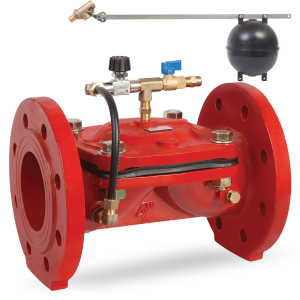
- To open and close the valve manually, move the ball valve indicated by 4 to the desired position.
- Clean the filter indicated by number 5 according to the degree of contamination of the water.

- Hydraulic Control Valve
- 2/2 Solenoid Valve
- Needle Valve
- Ball Valve
- Strainer